What people usually mean by an IELTS class, coaching or a course
The words overlap. A class often means a group that meets at set times with a teacher and classmates. A course often means a programme with a start date, a syllabus and one fee for the whole block. Coaching can mean either of those or one-to-one help, and “prep” is the loosest term of all. Before you compare prices, ask each provider which of these it actually means.
Where Band Booster IELTS fits
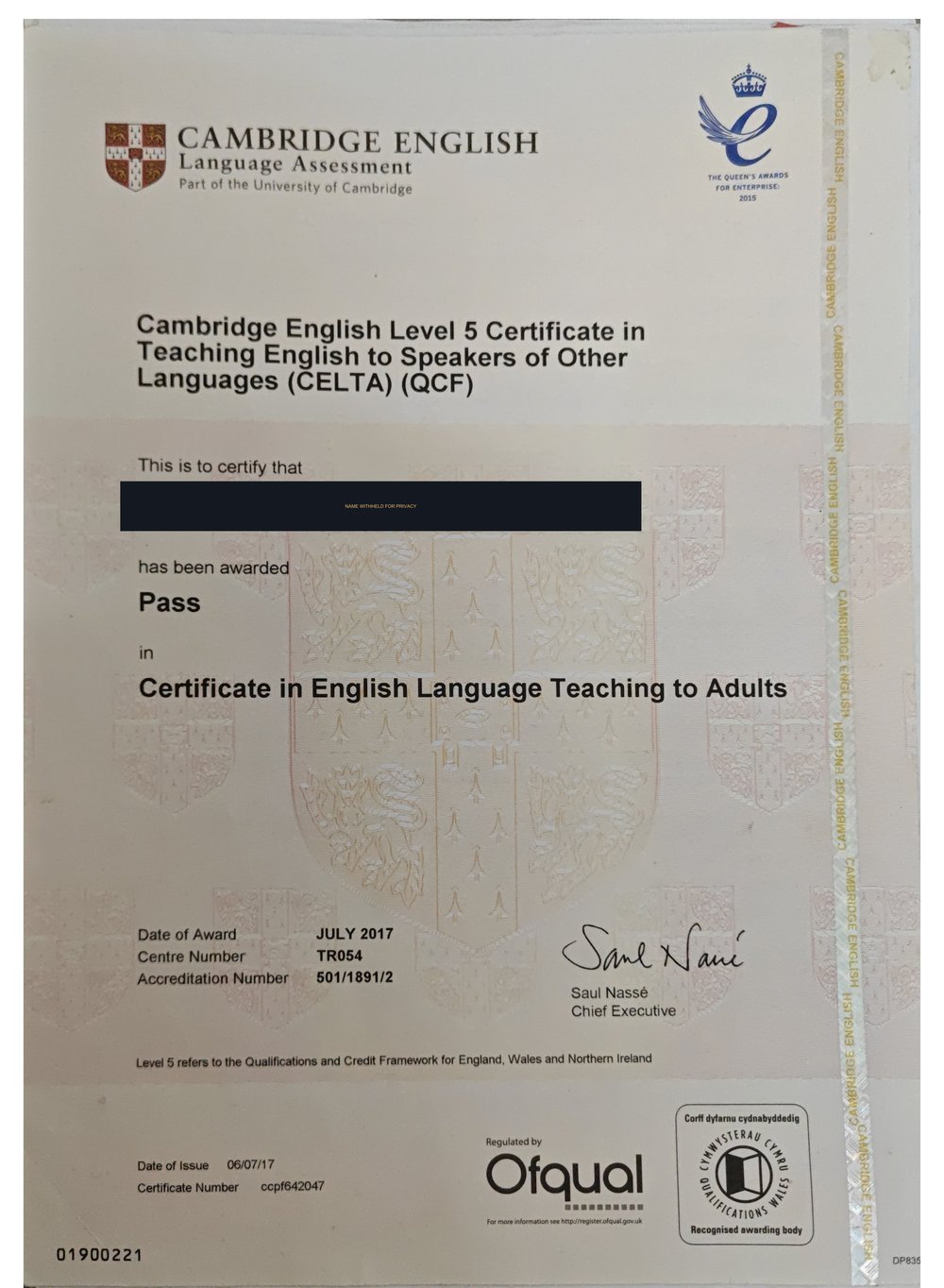
Band Booster IELTS is not a class, a course or a coaching centre. It offers one-to-one lessons online: Mike, a Cambridge CELTA-certified teacher based in Hanoi, teaches every lesson himself, live on Google Meet in English. There is no classroom, branch or premises in Singapore. You can book a single lesson on a calendar that shows your own time zone, with no fixed course, no subscription and no pack you must buy.
A lesson can be Writing, Speaking, Listening or Reading, on its own or mixed. If slots are open, you can book several lessons in the same week, for example before a test date. No number of lessons, timeline or band is promised.
When a class or a course is the better choice
- You want a weekly timetable that someone else sets, so that you keep going.
- You learn well alongside other people and want classmates to practise with.
- You want a syllabus laid out from the first lesson to the last.
- You prefer to attend in a room at fixed hours.
- Group fees are often lower per hour than private lessons, depending on the provider.
One-to-one lessons ask more of you. You plan your own sessions, and the open slots on Mike's calendar decide when you can study, so if you can only study at fixed hours, check the booking page first. If you want to study with a friend, lessons for 2 to 4 people you choose can be booked together (adults only for now).
When one-to-one online lessons fit better
- You know which skill you need, such as Writing Task 2 or Speaking Part 2, and want the time spent on it.
- You want your own answers marked and explained, not a model answer shown to a group.
- Your available hours change from week to week.
- You want feedback during the lesson, with written progress notes in your account afterwards.
- You would rather not travel: lessons are online.
What a lesson with Mike covers
In Writing, Mike marks Task 1 and Task 2 against the public band descriptors and corrects the answer with you. In Speaking, you practise Parts 1, 2 and 3 in the real test format and get feedback in the moment. In Listening and Reading, a lesson can go through the questions you found hard. You and Mike agree the focus; if you want to say it in advance, message him. Written progress notes stay in your account afterwards, so the next lesson can start where the last one stopped.
Questions to ask any provider before you pay
- Who teaches each session, and will it be the same person every time?
- How many people share the lesson?
- How and when do I get feedback on my own Writing and Speaking?
- What happens if I miss a session or need to move it?
- What does the fee cover, and what are the refund conditions? Ask for them in writing.
- Does anyone promise a band or a timeline? A promise of either is a warning sign.
A simple way to start IELTS preparation in Singapore
- Find out which test you need. The organisation that asked for your score can tell you whether it is IELTS Academic or General Training (how they differ).
- Sit one timed practice test and note which skill is lowest.
- Work on that skill first, with timed tasks rather than untimed reading about it.
- Get Writing and Speaking checked by a person. It can be hard to hear your own pronunciation or see your own pattern of grammar slips as clearly as someone else can.
- Repeat with the next skill, and keep the corrected versions of your answers.
For Speaking, the Speaking Part 2 timer and cue card themes help you practise alone between lessons. To see how scores add up, use the band score calculator.
Using a class and one-to-one lessons together
Some learners use both: a class for the routine and classmates, and one-to-one lessons for the skill where they want individual marking, often Writing or Speaking. Nothing about one-to-one lessons stops you taking a class as well.
Trying one-to-one lessons first
The paid 30-minute trial can be taken once, on your first booking: choose it on the booking page, in the lesson-length choice above the calendar. A regular lesson is 60 minutes. The booking page shows the exact amount in your own currency before you pay, and you can move a lesson at no charge up to 24 hours before it starts.
Singapore is one hour ahead of Hanoi all year. Subject pages: IELTS Writing tutor for Singapore and IELTS Speaking tutor for Singapore. For the overview, see IELTS tutor in Singapore, and for a general comparison, private tutor or centre. Ready to look at times? Go to the booking page.