The short answer
The Higher Education Admission Centre (HEAC) runs the unified admission system for Omani higher education, and IELTS is not one general entry test for all of it. In the HEAC student guide for 2026/2027, IELTS appears as an extra condition on certain programmes and as advice for students applying for overseas scholarships. Each programme sets its own band, so read the line for the programme you choose.
Read on 1 November 2026: the HEAC student guide published at heac.gov.om (a PDF of 272 pages, issued for the 2026/2027 academic year). The HEAC website itself loads its pages by script and we could not open its separate English-test FAQ file, so this page rests on the guide. Guides are reissued each year, so check the current one before you plan.
What the guide says about IELTS
- An extra condition, not a universal one. The guide tells applicants to check additional conditions that some programmes ask for when applying, and gives an IELTS requirement as its example.
- Overseas scholarships. For all scholarship countries except Germany, students are advised to take Academic IELTS, so that they meet the language requirement of the receiving institution. The guide names the month to sit the test and the deadline for the result, and asks that the result stays valid for at least one further academic year, so that a late result does not delay the start of study. Read the current guide for the exact timing.
- The United Kingdom. Students applying for scholarships in the UK are told to take IELTS for UKVI, which the guide describes as the test the UK sets for the student visa and for university admission.
- Language of study. The guide states that the language of study in all scholarship countries is English, except Germany, where it is German.
- Uploading the result. The guide asks students who hold an IELTS result to upload it to the electronic scholarship system during the registration stage, after the first sorting results appear, and warns that a student who has not taken the IELTS may not be able to start the programme on time. The passage is brief, so read the guide's own wording.
Examples of programme-level conditions
The guide lists IELTS inside individual programme entries. The figures below are examples taken from the 2026/2027 guide; they are not a general rule, and the entry for your own programme is the one that counts.
| Programme type in the guide | IELTS condition as printed |
|---|---|
| A medicine programme at the Royal College of Surgeons (Bahrain) | 5.5 overall and 5 in each skill |
| A computer science programme with artificial intelligence (Australia) | 6 overall and 5.5 in each skill |
| A law programme in the UK | 6.0 or an accepted equivalent, before registering for the programme in unified admission |
| Some engineering and IT programmes, including company-funded scholarships | IELTS 5, or 5.5 with 5 in each element, depending on the programme |
| Programmes marked Academic UKVI IELTS | The guide names that version of the test and gives a minimum band |
Some medicine entries also say that a student with IELTS 5.5 (or TOEFL 500 or 550, or an internationally accepted equivalent) is exempt from the English placement test at Arabian Gulf University. Read the exact entry, because the exemption belongs to that institution.
Which IELTS version?
The guide names Academic IELTS for overseas study and IELTS for UKVI for the UK. Compare it with IELTS for UKVI in Oman, and see Academic and General Training for the difference between the two main versions. Some programme entries name Academic UKVI IELTS as the required test, so match the version to the entry before you pay for a test.
What this page does not cover
- English requirements published by individual colleges and universities, including their foundation programmes: see IELTS and the General Foundation Programme in Oman.
- Doctors training abroad through the Oman Medical Specialty Board: see IELTS for Omani doctors training abroad.
- Test fees and test dates. Band Booster IELTS states neither; the providers publish them. Booking steps are on Booking IELTS in Oman.
This is general information from the HEAC guide, not personal advice. Admission and scholarship rules change each year, and the programme entry and the HEAC site decide what applies to you.
How lessons with Mike can help with this
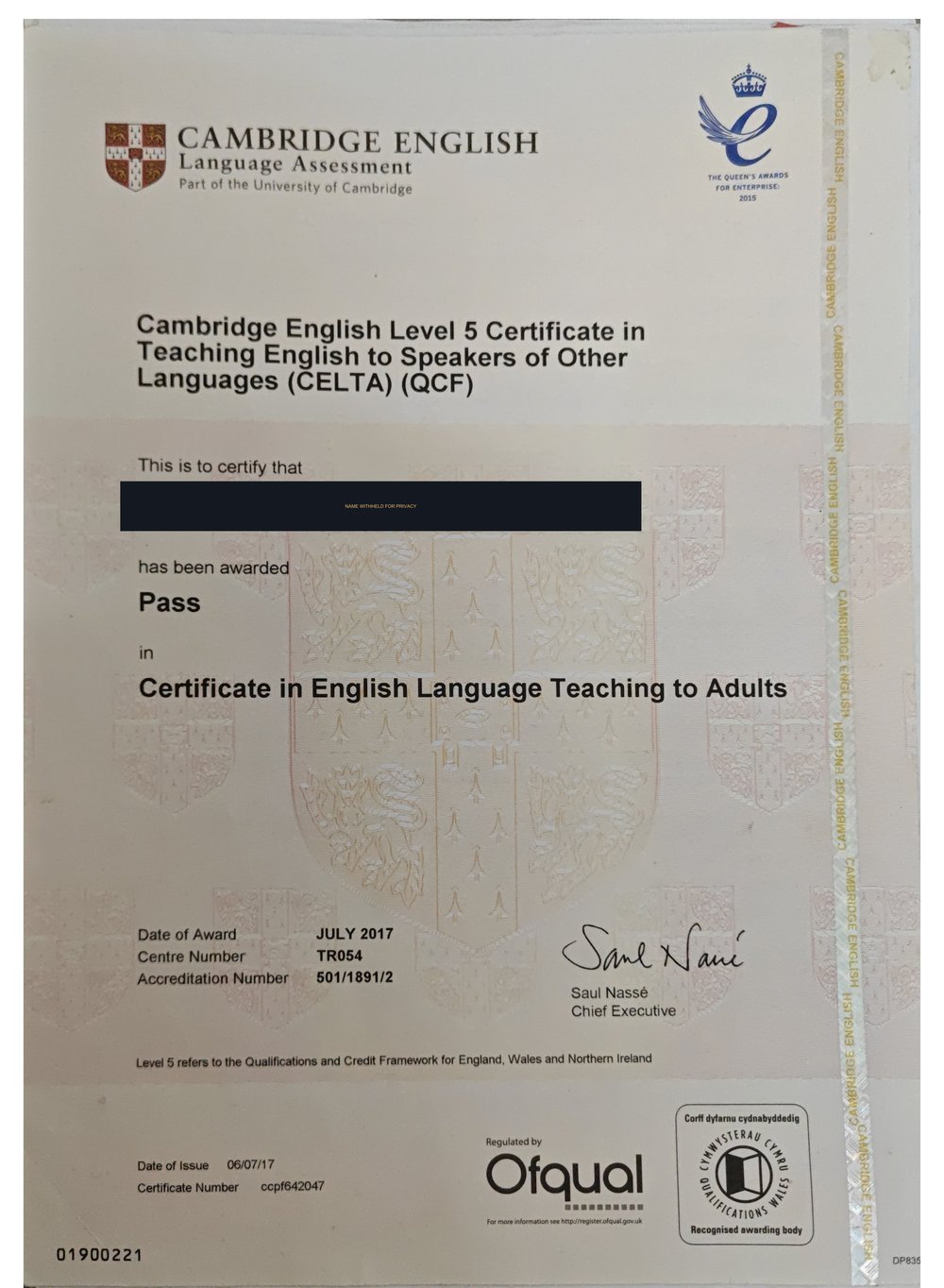
Band Booster IELTS is a private tutoring service, not a test centre and not connected with HEAC. Once you know the band your programme lists, Mike can work on the skill that holds your score down. He is a CELTA-certified teacher in Hanoi with 8.5 in Speaking in his own IELTS, and he teaches every session himself, one-to-one and live on Google Meet, in English. He marks Writing Task 1 and Task 2 against the public band descriptors, runs Speaking Parts 1 to 3 in the real format with feedback in the moment, and leaves written progress notes in your account. No band is promised: progress depends on where you start and on the work between sessions.
The booking calendar shows each slot in your own time zone, and you can reschedule at no charge up to 12 hours before. A paid 30-minute trial is available once per student on the first booking. The booking page shows the price before you pay. If you are under 18, a parent or guardian first agrees to a short consent letter before the booking is made. Open the booking calendar or read more about Mike.