Why Writing is the score people miss in Ireland
The bodies below set a minimum for Writing, not only an overall band. Writing is often where a candidate falls short, because it is the skill that is hardest to judge by yourself. Reading and Listening answers are right or wrong; a Writing answer needs someone who knows the criteria to tell you why it sits at 6.0 and not 6.5.
What the Irish pages say about Writing
These figures come from each body's own page, read on 31 October 2026. Rules change, so check the linked page before you act. This is general information, not advice on your application.
| Body | What it says about Writing |
|---|---|
| PSI (pharmacists) | IELTS Academic: Writing 6.5, with 7 in Speaking, Reading and Listening. Results are valid for two years and one-skill retakes are not accepted. |
| Dental Council | Accepts Academic IELTS, minimum 7.0 in each of Listening, Reading, Writing and Speaking; certificate no more than 2 years old. |
| NMBI (nurses, midwives) | Overall 7.0, with 7.0 in any three components and 6.5 in any one; its example table shows Writing at 6.5. |
| DCU | Business School (postgraduate) and School of Communications: no less than 6.5 in writing and speaking. Most other postgraduate faculties: 6.5 overall, no less than 6.0 in any one component. |
| University of Galway | General rule 6.5 overall, no section below 6.0. Some MSc programmes ask no less than 6.5 in writing. |
Compare the full list of bodies on IELTS scores for Irish registration bodies, or read the pages for the PSI, the Dental Council and NMBI.
What the two Writing tasks ask for
On ielts.org's Academic Writing page the test has two tasks in 60 minutes:
- Task 1: at least 150 words, with a guide of no more than 20 minutes. You describe visual information in your own words: graphs, charts, tables, or a diagram of an object, device, process or event.
- Task 2: at least 250 words, with a guide of no more than 40 minutes. You respond to a point of view, argument or problem.
Task 2 contributes twice as much as Task 1 to the Writing score, so a weak Task 2 is hard to make up. If you sit IELTS Academic, as the regulators above name, Task 1 means a chart, table, graph, process or map, not a letter. Letters belong to General Training; see IELTS Academic or General Training if you are unsure which you need.
How Writing is marked
The band descriptors are public. For Task 2 the four criteria on ielts.org's descriptor sheet are Task Response, Coherence and Cohesion, Lexical Resource, and Grammatical Range and Accuracy. Task 1 uses the same four, with Task Achievement in the first place. Feedback that does not name a criterion is hard to act on. "Write more clearly" is not a plan; "your paragraphs have no clear central idea, which limits Coherence and Cohesion" is.
If you are aiming at 6.5 or 7.0 in Writing
- Task 1: include an overview of the main trends, and choose figures to compare rather than listing every number.
- Task 2: answer every part of the question, and keep one main idea to a paragraph with a developed example.
- Vocabulary: precise words and natural collocations score better than rare words used awkwardly.
- Grammar: a few repeated error patterns usually cost more than many different mistakes. Find yours.
- Time: practise both tasks in 60 minutes. Check with your test provider whether you will write on paper or on computer, and practise in that format (IELTS on computer in Ireland).
How lessons with Mike can help with this
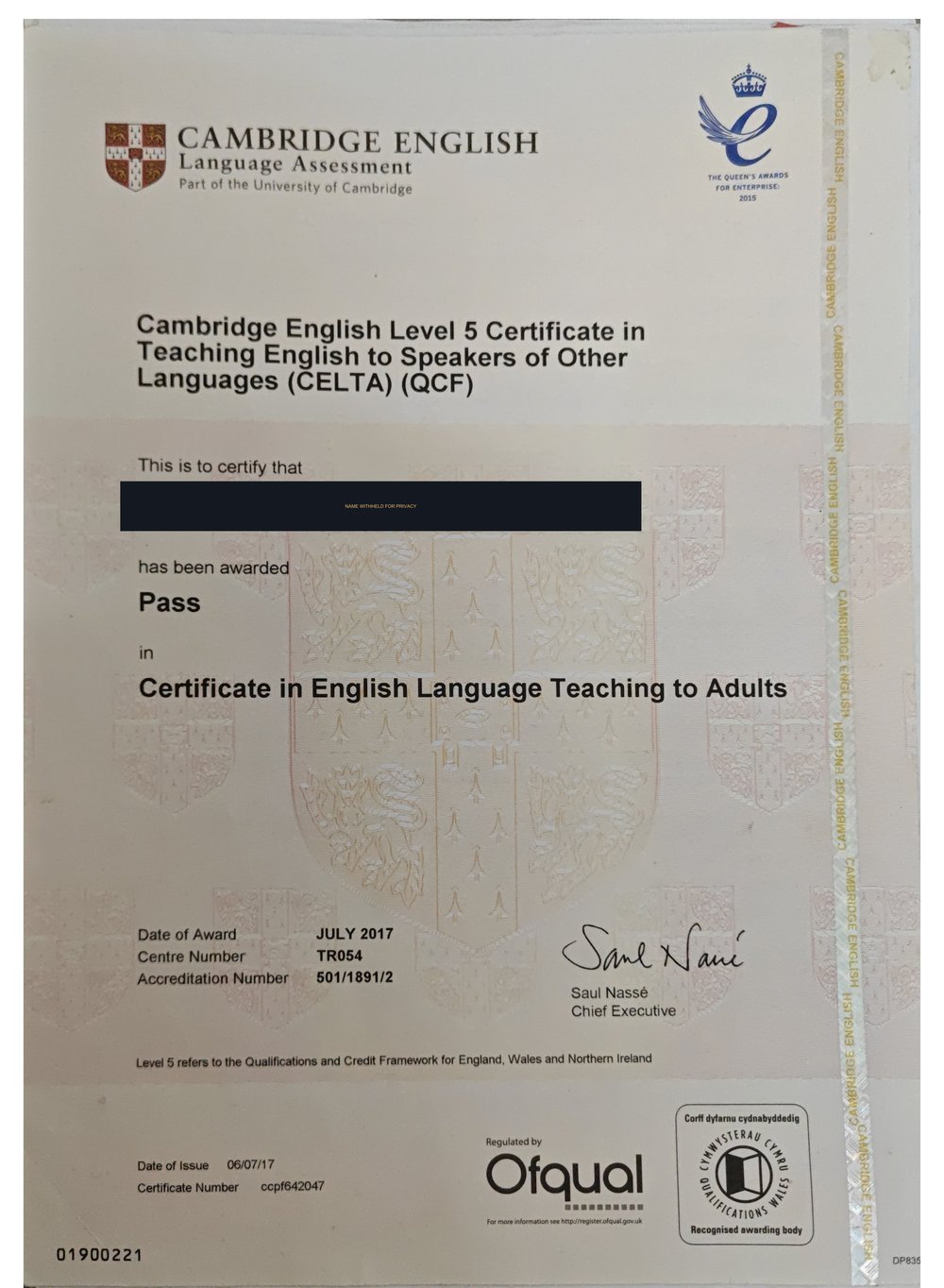
Band Booster IELTS is a private tutor, not a test centre or the exam board. It does not register candidates or set fees, and a lesson is practice, not the test. Mike is a Cambridge CELTA-certified teacher based in Hanoi, with 12+ years teaching English and IELTS in Vietnam, Turkey and Iran. He teaches every session himself, live on Google Meet in English. His own IELTS result is 8.5 in Speaking (about Mike).
For Writing, he marks Task 1 and Task 2 against the public band descriptors, explains which criterion is holding the score back, and leaves written progress notes in your account. You can write the answer beforehand and go through it together, or write under a timer in the session. The booking calendar shows each slot in your own time zone, so you can see the local time before you choose.
Speaking has its own page: IELTS Speaking coach for Ireland. No band is promised; progress depends on your starting point and the work between sessions. Book on the booking page.