The short answer from the Irish visa page
The Immigration Service Delivery page on English language requirements for study visas lists IELTS Academic, and UKVI IELTS, among the accepted tests. The minimum it sets is 4.0 for second-level, foundation-level and preparatory English courses, and 5.0 for all other courses. The page has footnotes defining those course types (for example, foundation level means NFQ Level 5, and second-level courses may only be taken in a private fee-paying school or college), so read them on the live page. The page states that these minimums are "for visa purposes".
That is only the immigration side. The same page says the minimum English standard for your course, as set by the college, "may be different". For a degree, the college figure is usually the one that decides your plans, so treat the visa number as a floor, not a target.
| Course type on the visa page | IELTS Academic or UKVI IELTS |
|---|---|
| Second-level, foundation level or preparatory English course | 4.0 |
| All other courses | 5.0 |
The page gives one figure per course type. As we read it, it does not set separate minimums for Listening, Reading, Writing and Speaking, so check the live page, and your college, for any per-skill rule.
Two minimums that people mix up
- The visa minimum. Set by the immigration authority and published on the page above. It is the lowest score the page accepts for the visa application.
- The college minimum. Set by each university or college, per programme. It can be higher than the visa figure, and the visa page itself says the onus is on each student to meet the language requirements of their intended institution.
Meeting the visa figure therefore does not mean you meet an admission requirement. For college figures, see IELTS scores at Irish universities, UCD, the University of Galway and UCC.
Other rules on the same page
- Validity. The certificate must have been issued within 2 years of the expected start date of your course.
- Online tests. The page adds that, because of Covid-19, results of online tests from the test providers are also accepted. The wording dates from that period, so confirm it is still the rule on the live page before you rely on it.
- English language courses. Applicants for these courses are not required to provide evidence from a test provider, but a Visa Officer may ask for alternative evidence of a basic level of English before you come to Ireland.
- Preparatory English. If you need a preparatory English course before the main course, it must not exceed 6 months, and the page lists extra requirements: a detailed study plan, and full payment of fees for both the preparatory course and the first year of the main course.
- Other tests. The table also lists tests such as TOEFL iBT, PTE Academic, Duolingo and Cambridge exams, each with its own minimums. IELTS is one accepted route, not the only one.
The page shows "last updated on September 16, 2024", and this article was written from it on 31 October 2026. Rules change, so read the live page before you apply.
Academic, General Training and UKVI
The table names IELTS Academic and UKVI IELTS. It does not name IELTS General Training, so if you hold only a General Training result, ask the college and the visa authority whether it can be used, rather than assuming. For the UKVI version, see IELTS for UKVI in Ireland, and check the provider pages for how and where it is booked. To choose between the two main versions, read Academic or General Training.
What the page does not decide
- Whether you need a visa at all. The Irish study pages say that a non-EEA, non-Swiss student will need a letter of enrolment and paid fees, and that, depending on your nationality, you may also apply for a visa. Whether you need a visa depends on your nationality, so use the official pages.
- Which course qualifies. For study longer than 90 days, the course must be on the Interim List of Eligible Programmes or the TrustEd Ireland Providers eligible programmes list; the immigration service's study options page says to check both lists.
- Exams after arrival. The student FAQ says that students on a full-time English language programme listed on the ILEP must attend at least 85% of classes, and that English language students must sit a recognised exam at the end of the programme. It does not name IELTS as that exam in the passages we read.
- Scholarships. The Government of Ireland International Education Scholarship FAQ says applying does not require an English language proficiency certificate, though you may be asked for one when applying to a higher education institution.
This page is general information taken from those official pages. It is not personal visa advice, and no score here ensures a visa decision; that rests with the authorities.
Booking the test
You register with the test providers, not with us. Check IELTS test centres in Ireland for the listed venues, dates and fees for where to look them up, and booking and ID for what to bring. Allow for the 2-year rule: a result taken too early may be out of date by your course start.
How lessons with Mike can help with this
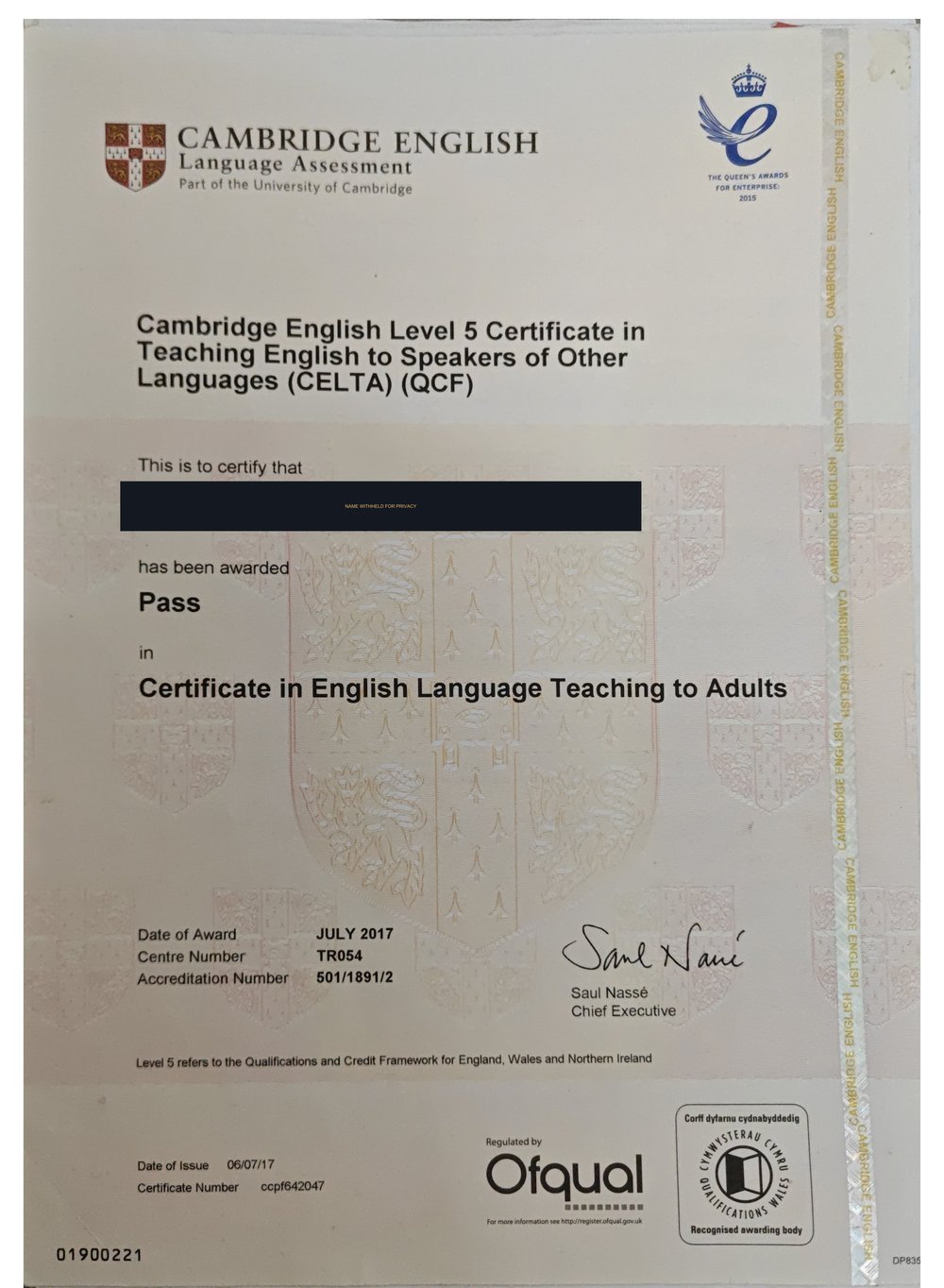
Band Booster IELTS is a private tutoring service, not a test centre, a visa adviser or an admissions office. Mike is a CELTA-certified teacher based in Hanoi, with 12+ years teaching English and IELTS in Vietnam, Turkey and Iran, and his own IELTS result is 8.5 in Speaking. He teaches every session himself, one-to-one, live on Google Meet in English.
Once you know the number your college asks for, lessons can be built around the weakest skill: Writing Task 1 and Task 2 marked against the public band descriptors, and Speaking Parts 1 to 3 in the real format with feedback in the moment. Written progress notes stay in your account. No band or timeline is promised. Read more on online IELTS tutoring for Ireland, or book a lesson; the booking page shows each time in your own time zone.